
Embroidery as Nature Connection
A Beginner’s Guide to Stitching for Wellbeing
Download a free nature-inspired embroidery pattern and learn simple stitches to relax, reconnect with nature, and start embroidery as a mindful hobby.
Embroidery helps us to reconnect with nature. Nature Connection doesn’t always mean hiking through forests or camping in the middle of nowhere. Sometimes, it can begin with a needle, thread, and a quiet hour of stitching.
Modern life is busy and we’re spending most of our days glued to screens. A survey by the Children's Commissioner for Wales revealed that 1 in 5 children spend at least 7 hours a day on phones and tablets! (BBC).
As a society, we’re becoming more and more disconnected from nature, and our attention spans are getting slower. Why does a slower attention span matter? When your attention is continuously drained, you get brain fog and you’ll make more careless mistakes. Think sending a risky message to your Mum rather than your friend. Or sending your Dad’s birthday present to yourself, rather than him (National Geographic).
“The absence of natural interactions contributes to a phenomenon known as nature-deficit disorder. This lack of exposure can lead to increased stress, anxiety, and higher levels of cortisol; a stress hormone that is otherwise lowered by brief outdoor walks,
- Green Planet Forest School.
If you can’t focus and have a low attention span, you’re constantly in a state of high alert. Long-term exposure to this can lead to long-term health issues like always feeling tired, gaining weight, and a weakened immune system… It’ll feel like you only have to walk past a snotty tissue on the street and you catch a cold.
The good news is, you can avoid becoming a shaking, sneezing couch potato with creative hobbies inspired by nature. They can help to reduce stress and encourage mindfulness. Observing the natural textures and colours helps you to feel connected to nature, then you enter a state of meditative flow whilst stitching. Embroidery is often called ‘meditation for people who can’t meditate’! Rhythmic, repetitive motions and tactile focus (the use of intentional touch to boost concentration and calm the nervous system), all lower our stress hormones (Artsy Lyons).
So why not try out embroidery to experience it for yourself? If you’ve been deliberating about which fibre art to try, we’ve created a free downloadable nature-inspired embroidery pattern. Below is an example of a completed version.
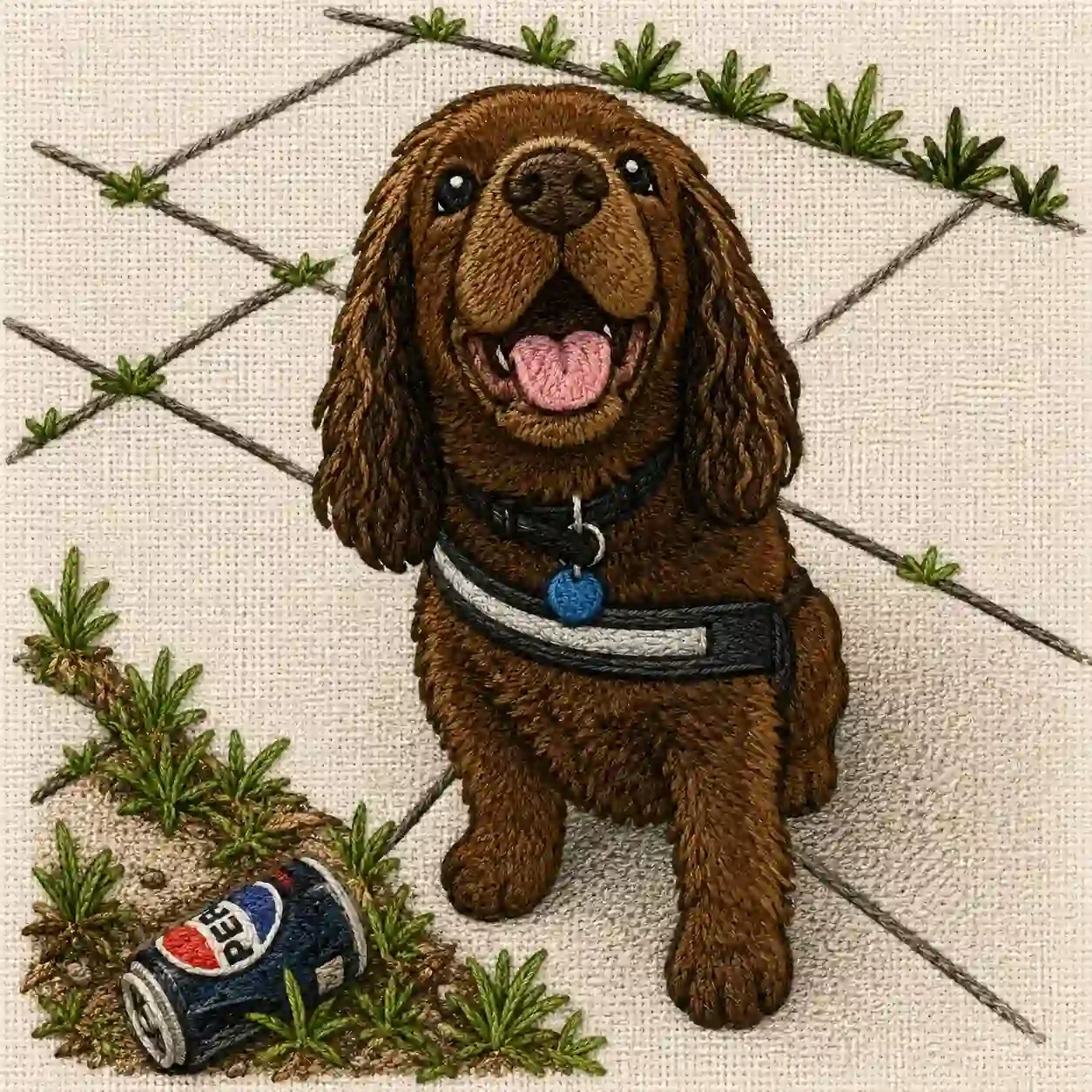
Copyright Knot Waste: Spaniel in Urban Litter - Completed Example
What Is Nature-Inspired Embroidery?
Fibre arts are experiencing a huge revival thanks to the rise of the Grandmacore trend. Pass-times like embroidery help our bodies to release dopamine which lowers our stress levels and helps to improve our moods.
Getting creative and turning to nature? Even better. Nature Connection can improve your health, strengthen communities, and encourage environmentally friendly behaviour. Stitching embroideries that reflect nature with things like plants, wildlife or pets, landscapes, seasonal outdoor textures and colours, is a great way to up your nature connectedness in an urban setting.
“While urban greening gives a city the nature it needs to survive ecologically, biophilic design gives humans the nature they need to thrive psychologically” -Journal of Biophilic Design.
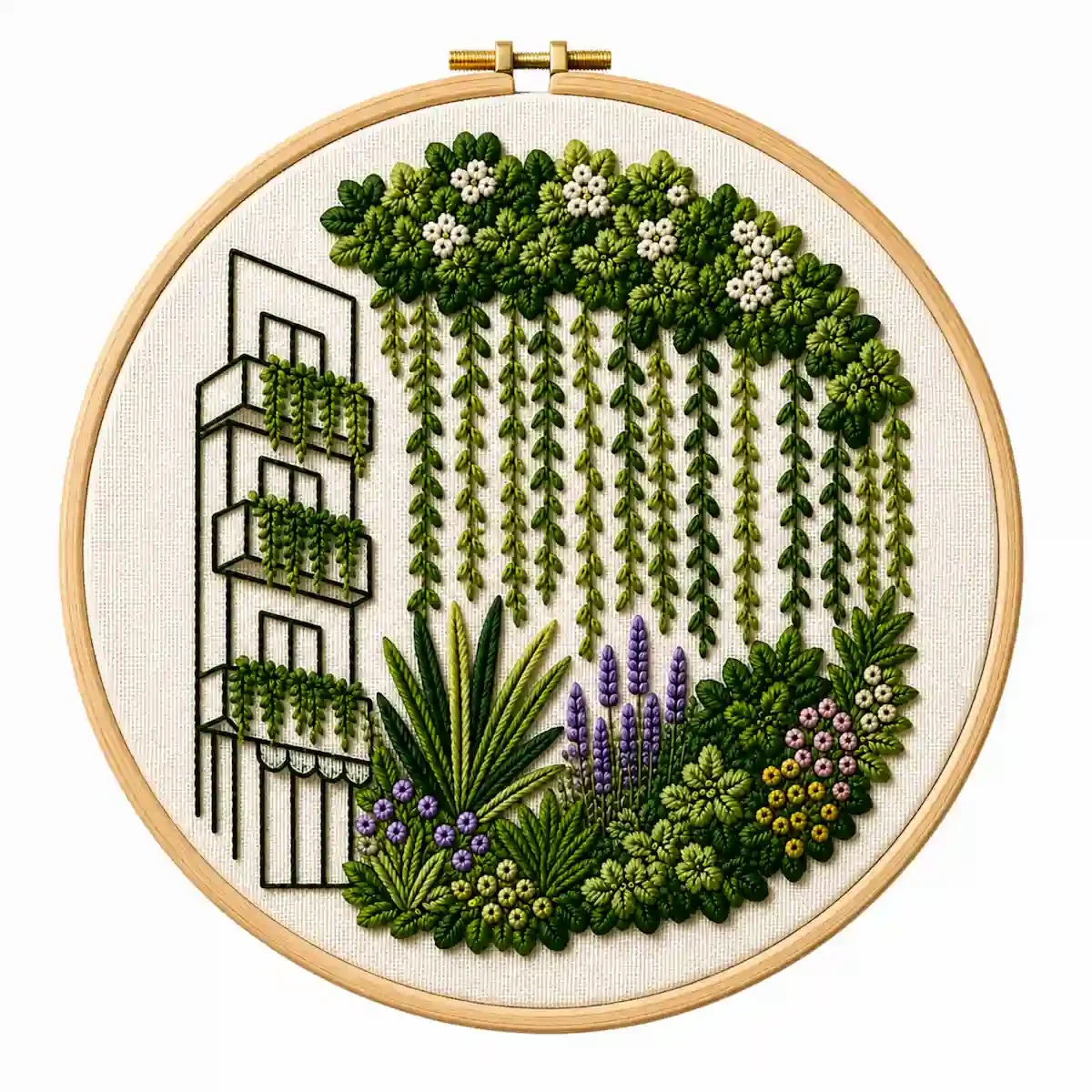
Copyright Knot Waste: Urban Green Wall in Bilbao, Basque Country.
Embroidery Patterns Available on the ETSY KnotWasteShop. (Beginner - Advanced).
How Embroidery Supports Mental Wellbeing
Research highlighted by the Crafts Council notes that mindful crafting can boost mental wellbeing. It can alleviate the symptoms of anxiety, depression, loneliness and even dementia.
“Creative activity undertaken daily is linked to positive psychological functioning, while increased engagement with arts events, historical sites, and museums is associated with improved life satisfaction”,
- Crafts Council.
For those who have received arts on prescription workshops, research shows less nerves, stress and anxiety. The feeling of flow puts you into a calming meditative state, that’s boosted with the feeling of satisfaction when you finish a pattern. Followed by pride as you hang it on the wall to add some of your own nature-inspired greenery to your room.
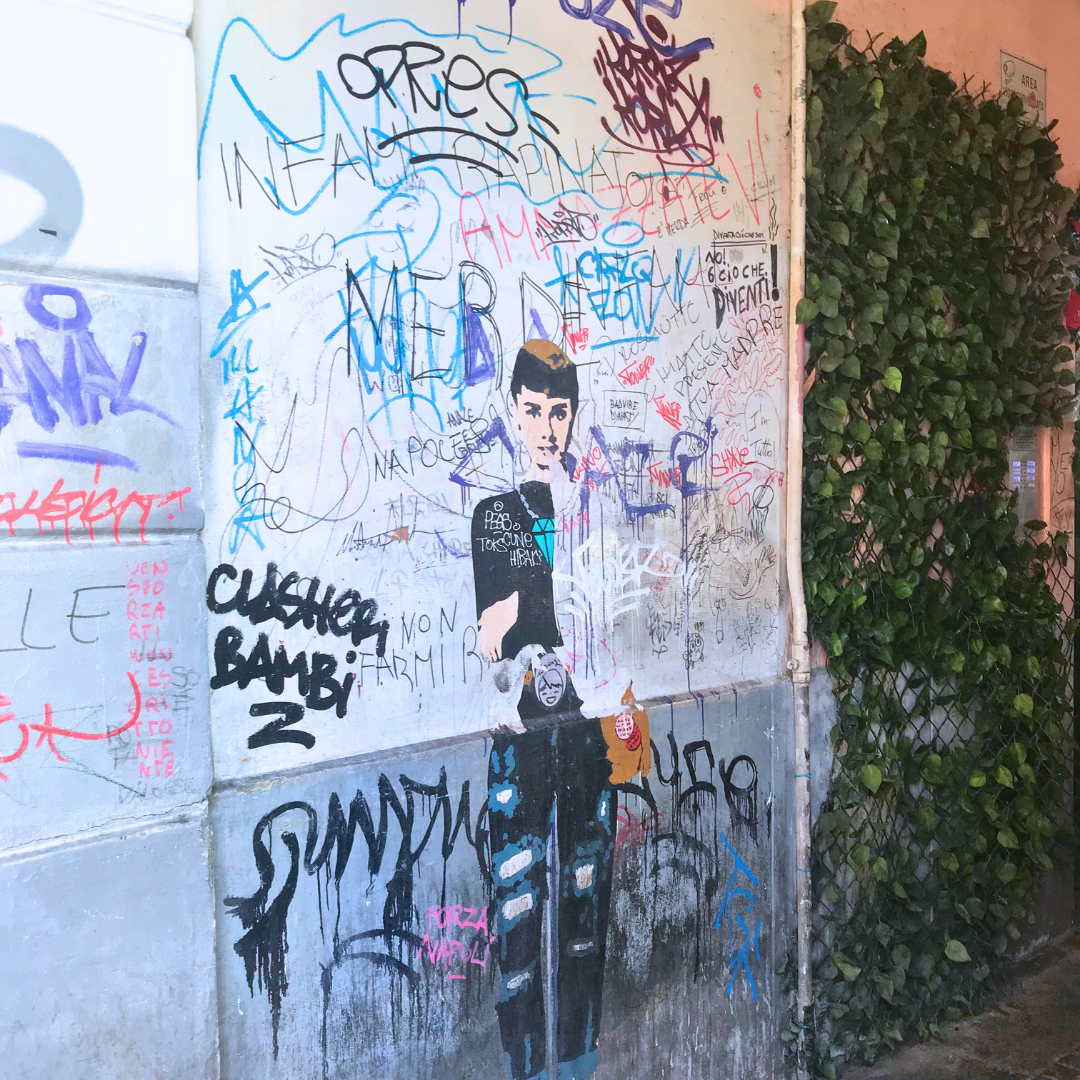
Copyright Knot Waste: Milan, Italy - Urban Greenery X Graffiti
Free Beginner Nature Embroidery Pattern
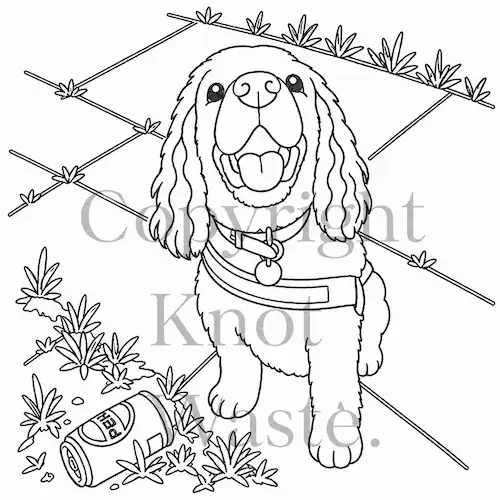
‘Spaniel in Urban Litter’ pattern.
Download our free printable pattern and try embroidery as a calming nature-inspired hobby.
The beginner-friendly ‘Spaniel in Urban Litter’ pattern needs no prior experience to complete as we’ll guide you through using simple stitches. We also designed the pattern to help the RSPCA raise awareness: Litter Vs Nature - How everyday waste harms wildlife and pets.
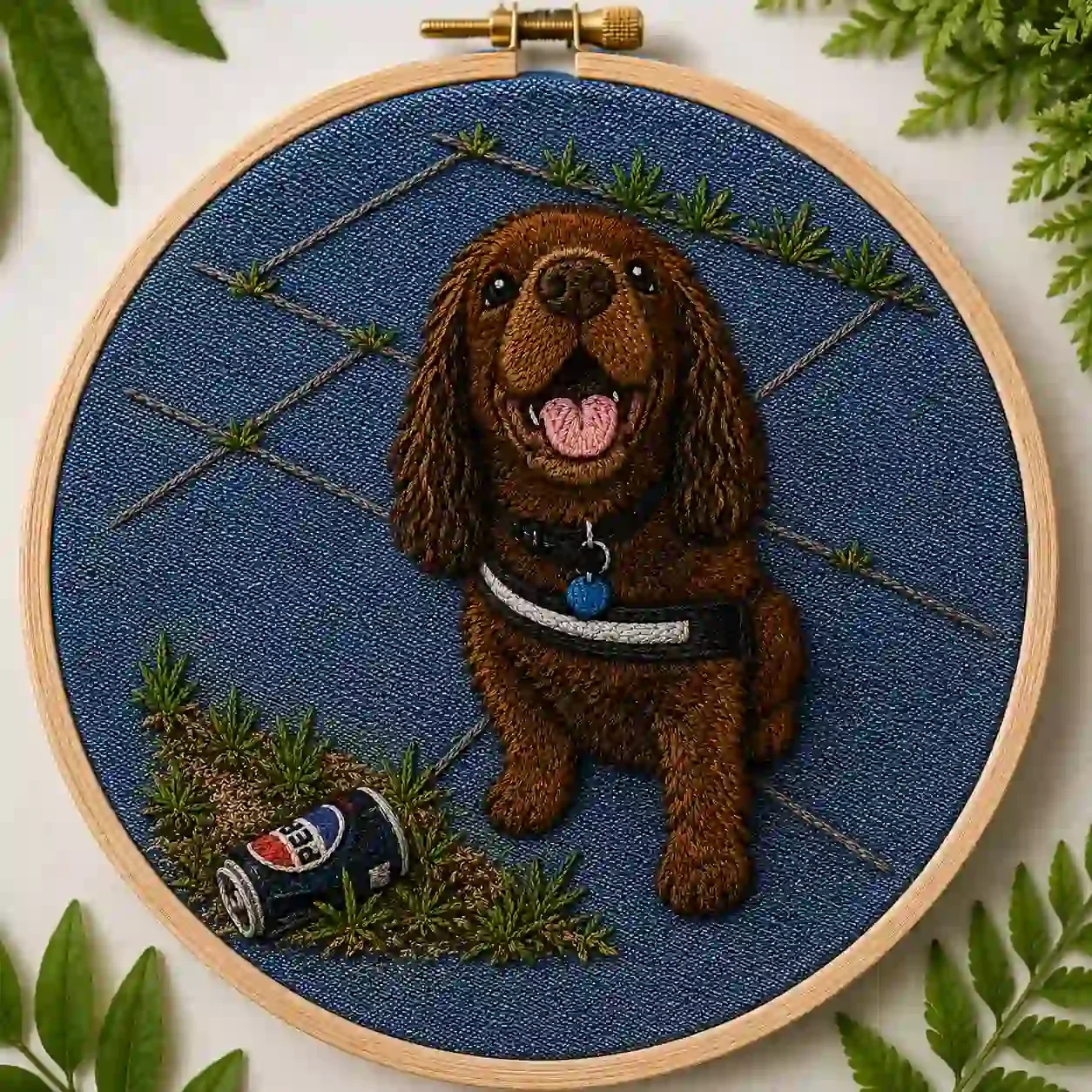
Copyright Knot Waste: Spaniel in Urban Litter - Completed on a Demin Canvas.
What You Need to Get Started
~ Embroidery hoop (5 inch)
~ Cotton or calico fabric. Or upcycle old fabric like denim.
~ Embroidery needle
~ Embroidery floss/thread
~ Small scissors
~ Printable pattern
~ Water-soluble pen or tracing paper
Beginner-Friendly Tip
if you’re new to embroidery, start with just 3-5 thread colours, and opt for inexpensive starter kits.
How to Stitch the Pattern
Step 1: Transfer the Pattern
Once you’ve downloaded and printed the free pattern, choose a transfer method depending on your chosen fabric. For white fabric like calico, place the pattern under the fabric and use the light from a window to guide your tracing with a water soluble or heat erasable pen.
Tip: For fabrics like denim, download the pattern directly onto Stick and Stitch embroidery paper. Peel off the back and stick the pattern onto your fabric. It’s water soluble paper, so once you’ve finished, you can wash it away.
Step 2: Set Up Your Hoop
Unscrew the hoop into two. Place the fabric in-between. Keeping it taut like a drum, close the hoop around it.
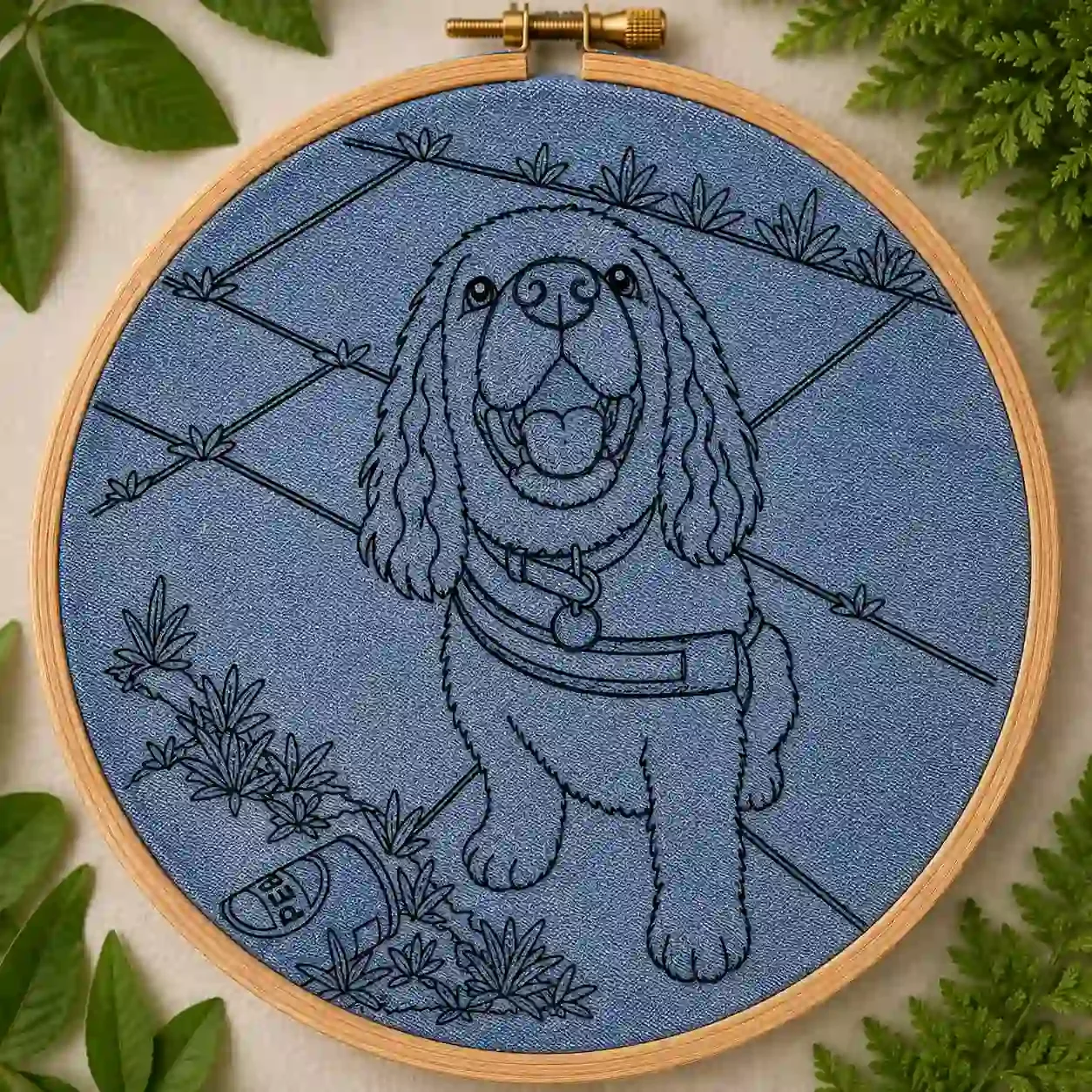
Copyright Knot Waste: ‘Spaniel in Urban Litter’ Embroidery Pattern on Denim
Step 3: Start With the Outline
Recommended Stitch: Back Stitch
Back Stitch is probably the easiest stitch to learn, and the best for creating outlines around shapes. Use it to outline the dog in medium brown. Afterwards, outline the pavement in dark grey.
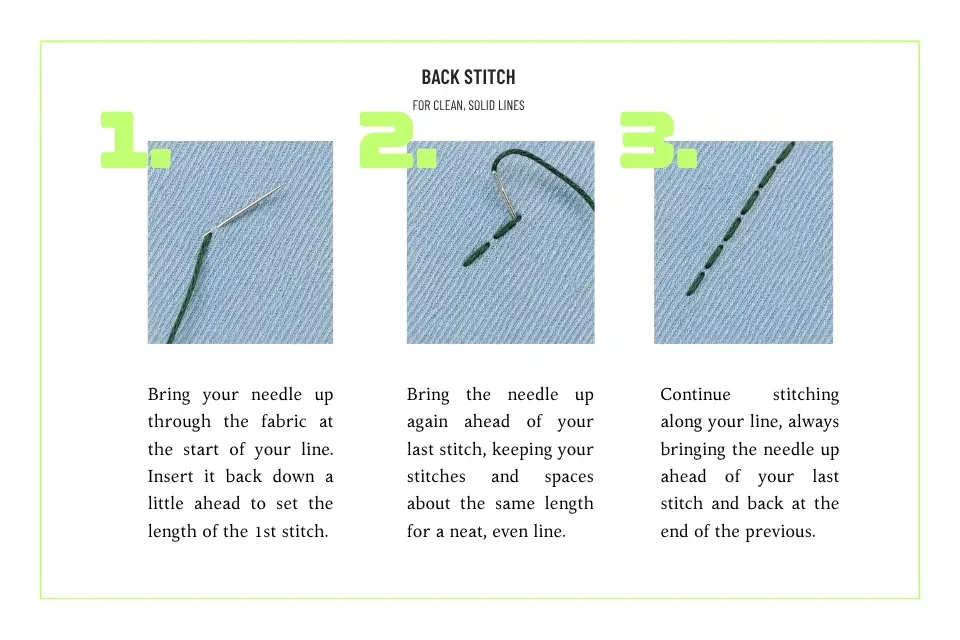
Copyright Knot Waste: Step by Step for Embroidery Back Stitch.
Step 4: Add Texture to the Fur
Recommended Stitches: 1) Long and Short Stitch, 2) Split Stitch
1) It’s time to colour your dog in with thread. Use Long and Short Stitch for this. Use stitches of slightly different lengths and work in small sections. Opt for browns in shades like medium brown, warm tan, and dark chocolate brown. Follow the direction the fur naturally grows e.g. long downward stitches on the ears, shorter curved stitches on the face, and slightly fluffier angled stitches on the chest.
Tip: This is the base layer. You don’t need perfect blending for realistic looking fur.
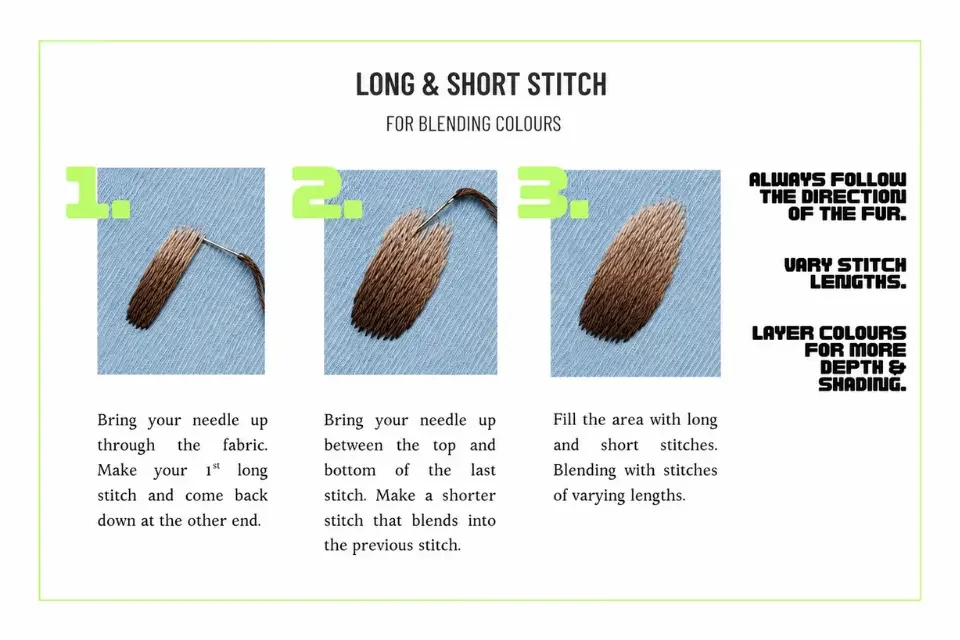
Copyright Knot Waste: Embroidery Long and Short Stitch Step by Step.
2) Once the base is filled, add Split Stitch for extra fur texture. Where you want to add more texture, mainly in darker areas, add a few Split Stitches on top. This is particularly great for around the ears, under the chin, around the mouth, chest fluff, darker shadow sections, and edges of the legs.
Tip: You don’t need dense stitching everywhere. So, don’t cover the entire dog twice. Cover around 85–90% of the dog with Long and Short Stitch, then create highlights with Split Stitch.
Copyright Knot Waste: Embroidery Split Stitch Step By Step.
Step 5: Stitch Weeds / Grass
Recommended: 1) Straight Stitch 2) Fishbone stitch (optional intermediate)
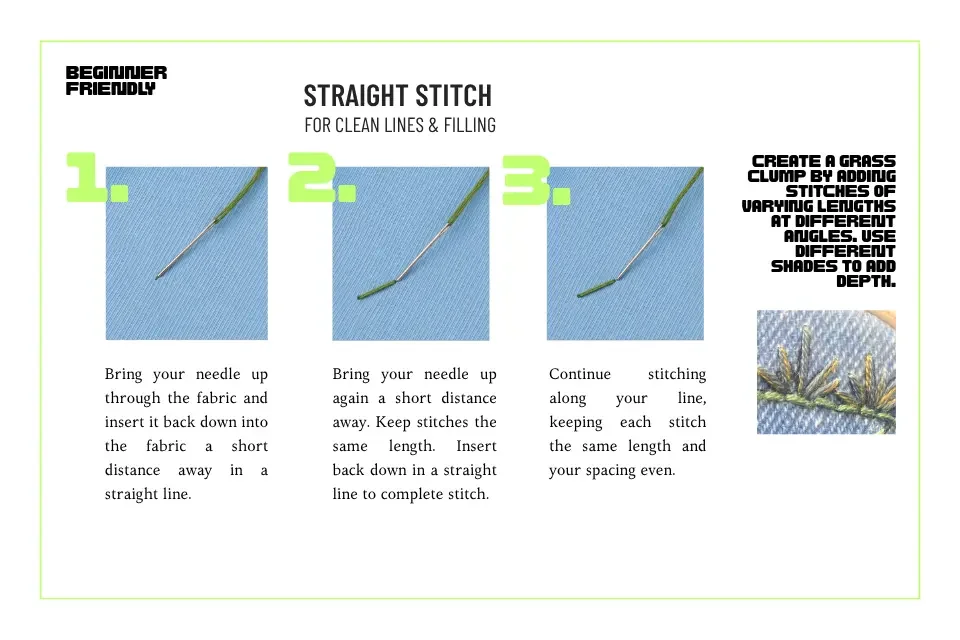
Copyright Knot Waste: Embroidery Straight Stitch Step by Step.
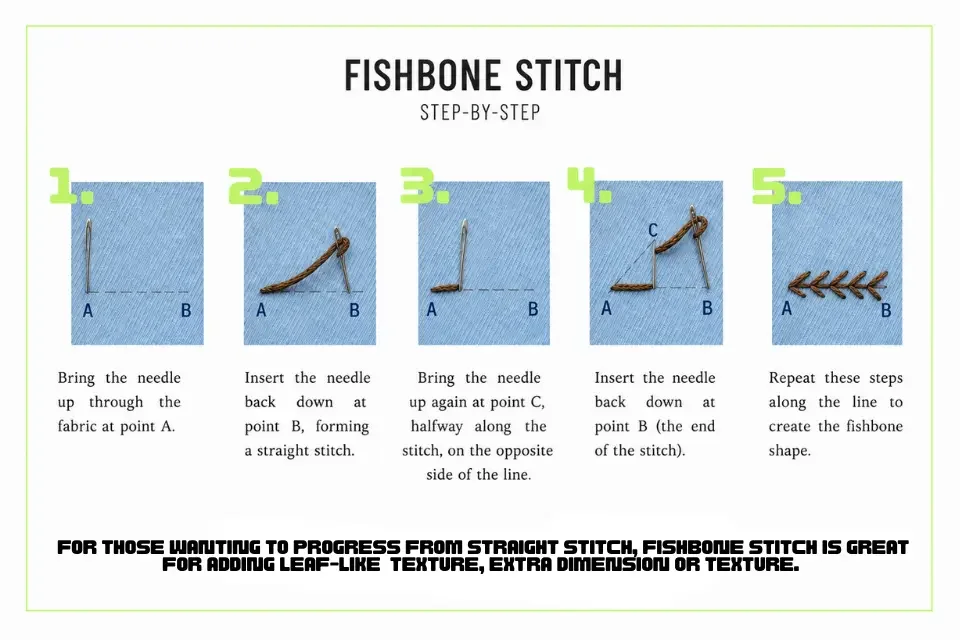
Copyright Knot Waste: Embroidery Fishbone Stitch Step by Step.
Step 6: Add the Tin Can Details
Recommended Stitches: 1) Satin Stitch 2) Back Stitch
Use Back Stitch again to outline the tin can, then use Satin Stitch for the logo.
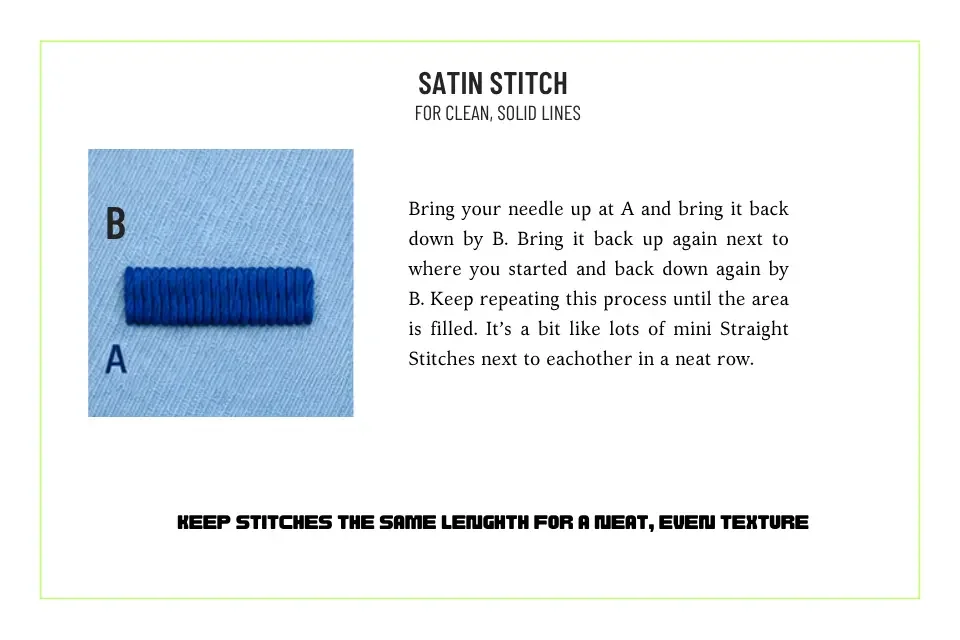
Copyright Knot Waste: Embroidery Satin Stitch Step by Step.
Step 7: Finishing Touches
Your embroidery is almost done! Now for a few finishing touches. If you’ve used water soluble paper or pen, then wash it away in some warm water and let the embroidery dry. If you’ve used a heat erasable pen, blast the embroidery with a warm hairdryer to instantly remove any traces of ink.
Iron the back of a dry embroidery on a soft towel, then frame it back in its hoop. Trim away any excess material, leaving around 2 inches spare to gather with running stitch.
Easy Embroidery Stitches for Beginners
A Mini-Guide for the Featured Simple Stitches.
1) Back Stitch
3) Split Stitch
5) Satin Stitch
Beginner? Don’t Worry About Perfection
Try out our free download and join the slow hobby trend. Nature Crafts like embroidery and knitting, or visible mending are growing in popularity as people are sick of feeling the digital burnout.
Don’t be put off from giving it a go if you’re a beginner. In any case, embroidery is not about perfection, as choosing your own colour floss, stitch type, and non-perfect stitching adds to creating a bespoke piece of embroidery art.
Remember the focus is on the relaxing process.
Try Embroidery as a Way to Connect With Nature
in Urban Areas.
Sometimes reconnecting with nature starts with noticing the tiny details, like the texture of grass, the shape of a leaf, or the comfort of a familiar dog walk. Embroidery is a slow, creative way to hold onto those moments 1 stitch at a time.
~ Download the free ‘Spaniel in Urban Litter’ embroidery pattern.
~ Share your finished embroidery art on social media, and tag @Knot_Waste Insta.
FAQs
Is embroidery good for mental health?
Yes. Embroidery is a great mindful hobby for supporting mental health. Lots of people find that the repetitive motion of stitching helps calm the mind, reduce stress. Unlike fast-paced digital activities, embroidery invites you to slow down, focus on the present moment, and create something with your hands.
Nature-inspired embroidery can feel especially relaxing because it combines creativity with themes from the natural world, such as plants, animals, and outdoor textures. Even simple beginner embroidery projects can help create a sense of achievement and provide a gentle break from screens and daily pressures.
Embroidery May Help:
Reduce feelings of stress and overwhelm.
Improve focus and concentration.
Encourage Relaxation and Mindfulness.
Provide a creative outlet.
Support screen-free self-care routines.
Create a comforting sense of routine.
Embroidery is beginner-friendly and easy to pick up in short sessions, so it can become a calming part of everyday life. Many people use embroidery as a mindful hobby to reconnect with creativity, nature, and slower living.
What is the easiest embroidery stitch for beginners?
The Back Stitch is often considered the easiest embroidery stitch for beginners because it is simple to learn, versatile, and creates clean, smooth lines. Back stitch is commonly used for outlines, lettering, and adding detail to embroidery patterns, making it a great starting point for first-time Stitchers.
To Create a Back Stitch:
~ Bring the needle up through the fabric.
~ Make a small stitch forward.
~ Bring the needle up again one stitch length ahead.
~ Stitch backwards into the end of the previous stitch.
This creates a continuous line that is strong, neat, and easy to control.
Other beginner-friendly embroidery stitches include:
~ Straight Stitch for grass, leaves, and simple details.
~ Satin Stitch for filling shapes with solid colour.
~ Split Stitch for adding texture and definition.
~ Long and Short Stitch for soft fur and shading effects.
Many beginner embroidery projects use just three to five simple stitches, so you do not need advanced skills to get started. Learning a few basic stitches can help you build confidence while enjoying embroidery as a relaxing and mindful creative hobby.
What fabric should beginners use for embroidery?
For beginners, the best fabric for embroidery is a medium-weight cotton fabric with a tight, even weave. Cotton is easy to stitch through, holds embroidery well, and works beautifully for beginner embroidery patterns and practice projects.
Best Beginner-Friendly Embroidery Fabrics:
~ Cotton calico.
~ Plain cotton fabric.
~ Linen blends.
~ Embroidery cotton.
~ Denim for more textured projects.
Many beginners start with calico because it is affordable, easy to find, and stable enough for simple embroidery stitches like Back, Satin, and Straight Stitch.
If you are using a detailed embroidery pattern, choose a fabric that:
~ Is not too stretchy.
~ Is tightly woven.
~ Holds an embroidery hoop securely.
~ Allows your pattern lines to remain visible.
For nature-inspired embroidery projects, natural fabrics like cotton and linen can also add to the handmade, organic feel of the finished piece.
Beginners May Want to Avoid:
~ Very stretchy fabrics.
~ Thin jersey materials.
~ Slippery satin fabrics.
~ Loosely woven fabric that can distort stitches.
Old clothes, like denim jeans, are also great for upcycling into fabric patches to make embroidery art upon, or turn into creative mending badges.
Using an embroidery hoop can also help keep the fabric taut while stitching, making embroidery easier and more enjoyable for beginners.
How long does beginner embroidery take?
The time it takes to complete beginner embroidery depends on the size of the pattern, the number of stitches used, and how detailed the design is. Small beginner embroidery projects can often be completed in a few relaxing sessions, while larger or more detailed pieces may take several days or weeks.
For a simple beginner embroidery pattern:
~ Small projects may take 1–3 hours.
~ Medium beginner designs may take 5–10 hours.
~ Detailed embroidery with layered stitches can take much longer.
Nature-inspired embroidery projects are ideal for stitching slowly over time because they can be worked on in short, mindful sessions. Many people enjoy embroidery as a calming hobby rather than rushing to finish quickly.
The stitches you choose will also affect the time needed:
~ Back Stitch and Straight Stitch are usually quick and beginner-friendly.
~ Satin Stitch takes longer because stitches need to sit closely together.
~ Long and Short Stitch and Split Stitch can take more time due to layering and texture.
Beginners should remember that embroidery is meant to be enjoyable, not perfect. Taking your time helps you build confidence, improve your stitching skills, and enjoy the relaxing process of creating something by hand.
Can embroidery help with mindfulness?
Yes. Embroidery can be an excellent mindfulness activity because it encourages slow, focused attention and helps bring your awareness into the present moment. The repetitive rhythm of stitching can feel calming and meditative, making embroidery a popular creative hobby for relaxation and stress relief.
Mindfulness is the practice of paying attention to the present without judgement. Embroidery naturally supports this because it encourages you to focus on:
~ The movement of the needle.
~ The texture of the fabric.
~ The colour of the threads.
~ The rhythm of each stitch.
Many people find that embroidery helps quiet racing thoughts and provides a gentle break from screens, notifications, and everyday stress. Nature-inspired embroidery can feel especially grounding because it combines creativity with calming imagery such as plants, wildlife, flowers, and outdoor scenes.
Embroidery May Support Mindfulness By:
~ Encouraging concentration and focus.
~ Creating a sense of calm and routine.
~ Helping reduce stress and overwhelm.
~ Promoting slower, screen-free activities.
~ Providing a creative form of self-care.
Because embroidery can be picked up in short sessions, it is an accessible mindful hobby for beginners. Even simple stitches like Back Stitch or Straight Stitch can become soothing when repeated slowly and intentionally.
Explore other nature-inspired patterns on the ETSY KnotWasteShop.
Sign up to join the Knot Waste club for emails with special treats and launch info.