
Easy Embroidery Stitches for Beginners
With a Nature-Inspired Project to Try
Creating a beautiful piece of nature-inspired embroidery doesn’t need to be complicated. It can be as easy as learning a handful of simple stitches to create your very own little piece of art. No matter what stage you’re at, just learning a few basic techniques can open up a world full of creative stitching opportunities.
Knot Waste turns to nature for inspiration, and in particular, finding inspiration in overlooked urban nature from moss-covered walls to climbing plants reclaiming city spaces. A walk through the woods often turns into taking a million photos. That can mean anything from a camera roll filled with litter pics to creative green solutions captured along the way. Nature activities often lead to nature crafts. It’s nice to have a purpose for all of the photos that get taken, and turning those into nature embroidery patterns is the perfect way to still feel connected with nature whilst your back indoors stitching.
The 4 Easiest Embroidery Stitches Every Beginner Should Learn
Running Stitch
The most simple and versatile of all of the stitches is probably the Running Stitch. It’s great for outlining shapes, adding delicate details, creating stems and vines, or introducing subtle texture. Plus, it’s really easy to create, as you just have to pass the needle in and out of the fabric at regular intervals. The movement quickly becomes rhythmic, so it's an enjoyable stitch to practise and helps build confidence with needle control. The rhythm is also great for getting into creative flow to help improve your wellbeing and support your overall mental health.
Top Tip: Try to keep your stitches and the spaces between them a similar length. They don't need to be perfectly uniform, as slight variations can give your embroidery a natural, hand-stitched character.
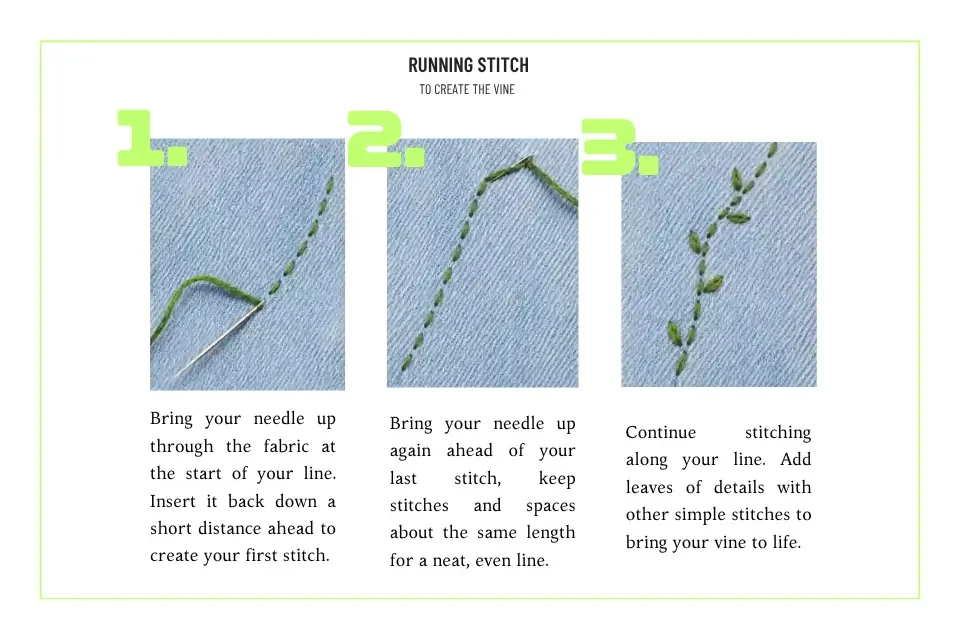
Copyright Knot Waste - Running Stitch Step by Step
Back Stitch
The Back Stitch is a go-to for creating smooth, continuous lines, like outlines, lettering, stems and architectural details. Unlike Running Stitch, with back Stitch there are no gaps. Each new stitch overlaps the previous one, producing a stronger, more defined line. It’s a really easy stitch to learn, and that’s probably why it features so frequently in modern embroideries.
Top Tip: Keep your stitches short and consistent, especially around curves. Smaller stitches will help your outlines flow more smoothly and create neat, crisp lines with a professional-looking finish.
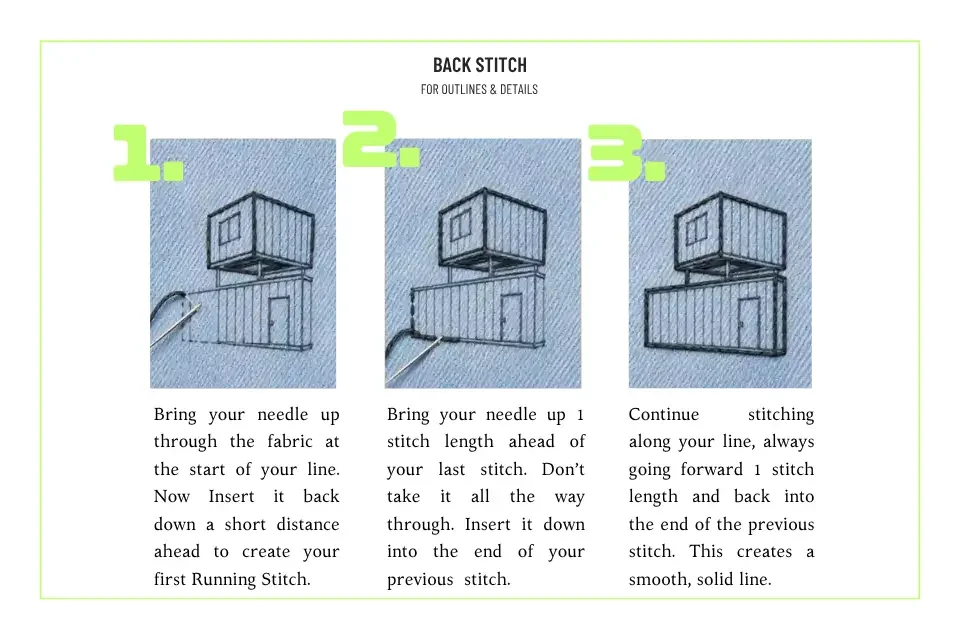
Copyright Knot Waste: Back Stitch Step by Step
Stem Stitch
Once stitch that crops up time and time again when you’re doing botanical or nature-inspired embroidery has to be Stem Stitch. It's ideal for stitching flower stems, vines, curved branches and organic outlines. Stem Stitch creates smooth lines with a subtle twisted texture, and as the stitches overlap slightly, the line flows naturally around gentle curves and adds more character than a simple outline.
Top Tip: Keep your working thread on the same side of the needle throughout the entire row. This helps maintain the stitch's distinctive twisted appearance and creates an even, consistent finish.
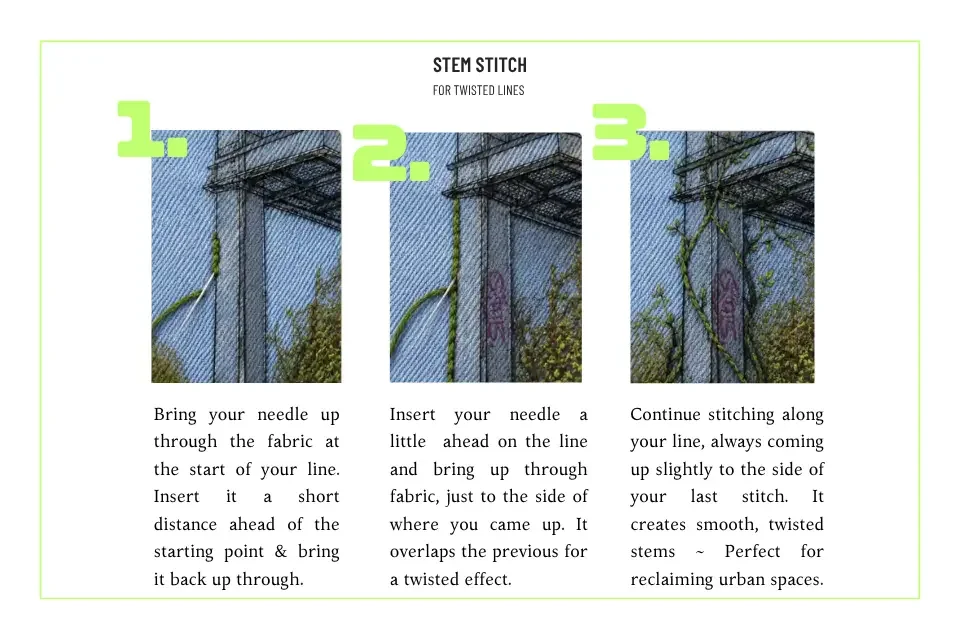
Copyright Knot Waste: Stem Stitch Step by Step
Long and Short Stitch
When you want a natural, blended finish rather than a solid block of colour, opt for Long and Short Stitch. It’s a versatile filling stitch used to create smooth shading, soft colour transitions and realistic texture in embroidery. Varying the stitch lengths creates a more lifelike effect and adds depth to your work. When you’re a beginner, it's also a great stitch to experiment with as there are no perfectly straight lines to follow.
Top tip: Mix longer and shorter stitches as you work, avoiding obvious rows to achieve a softer, more natural-looking blend.
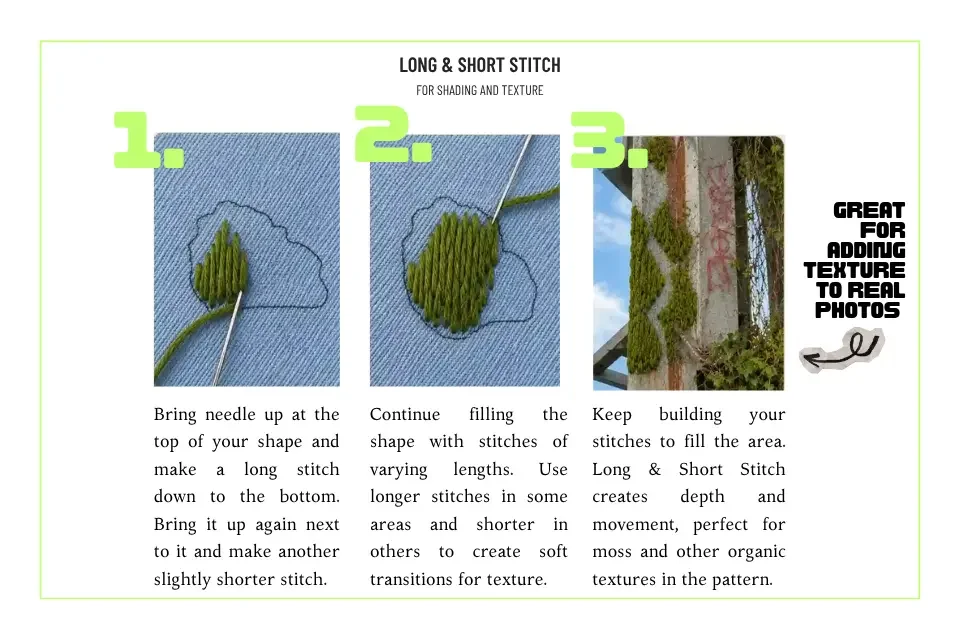
Copyright Knot Waste: Long and Short Stitch Step by Step.
Why These Four Stitches Are Enough to Create Beautiful Embroidery
At a first glance, modern embroidery can seem really complex but most patterns only use a handful of stitch types that are simple to learn and easy to use. Use a simple stitch like Back Stitch to create an outline, add detail with Stem Stitch, and fill it out with Long and Short Stitch. A stunning piece of modern embroidery is easier to create than you realised!
Finding Inspiration in Urban Nature
Now that you’ve learnt enough stitches to create your very own embroidered master piece, it’s time to get a little inspiration for your pattern. All nature is calming and inspiring but it’s urban nature that Knot Waste is drawn to. It's the unexpected places where nature quietly reclaims our cities that we want to capture.
We use our travel photos to create AI generated embroidery patterns, and we recently did this after a trip exploring Bilbao, in Spain’s beautiful Basque Country. On our way to wander abandoned parts of a village, we found a giant living green wall at the entrance to the Artxanda funicular.
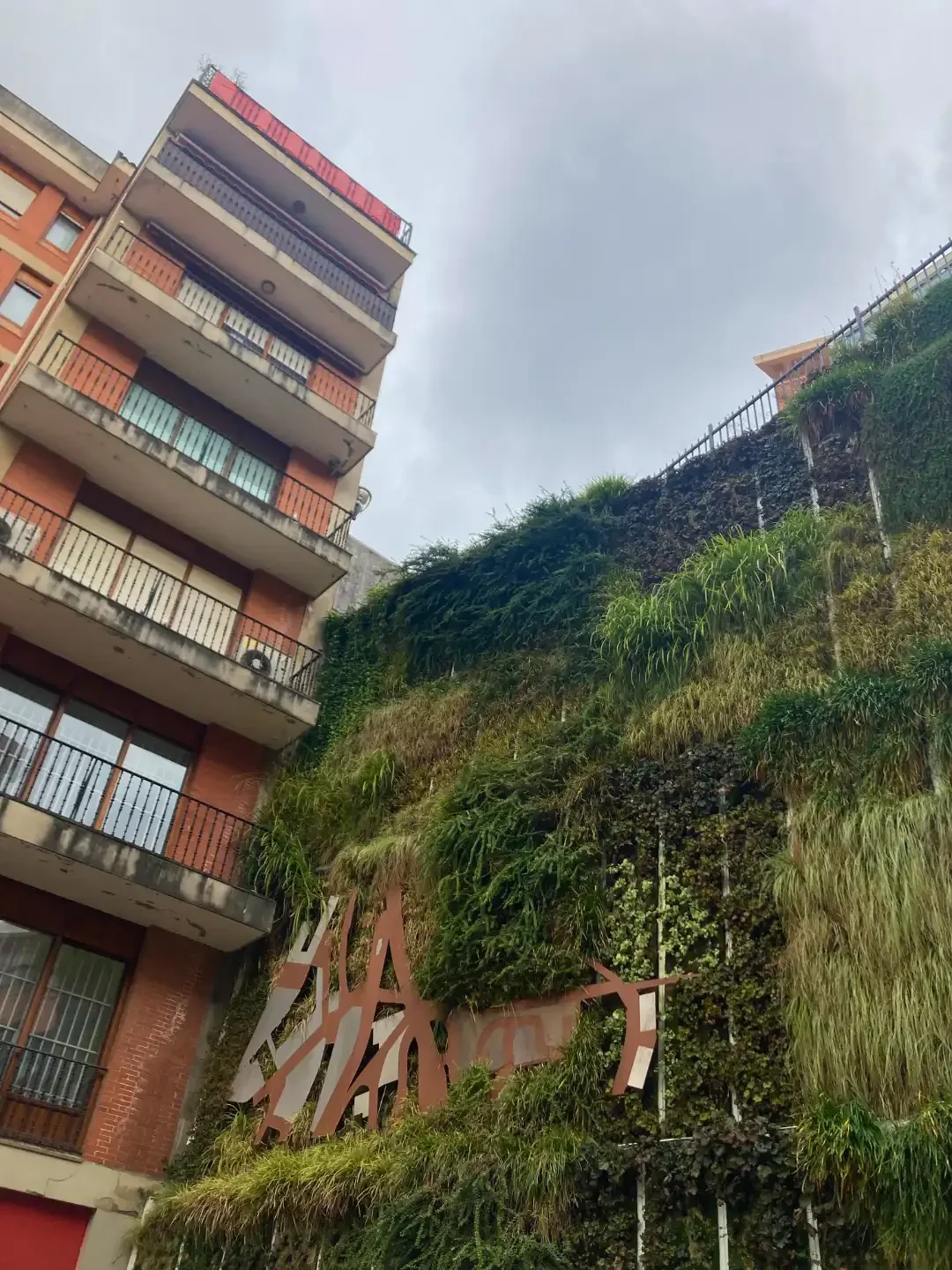
Copyright Knot Waste: Bilbao, Spain Basque Country - Urban Green Wall.
Completed in 2022 by Singular Green, the vertical garden located in the funicular square measures around 20 metres wide by 12 metres high. Not only is the living wall a great example biophilic urban design, it was also created with urban greening in mind.
“This is not merely an aesthetic project, as it is considered that this project is intended to improve air quality and reduce ambient temperature, as well as indoor and outdoor ambient noise, with the consequent increase of well-being and greater social interaction,”
- Nora Abete, Mobility and Sustainability Councillor, City Council.
(Singular Green).
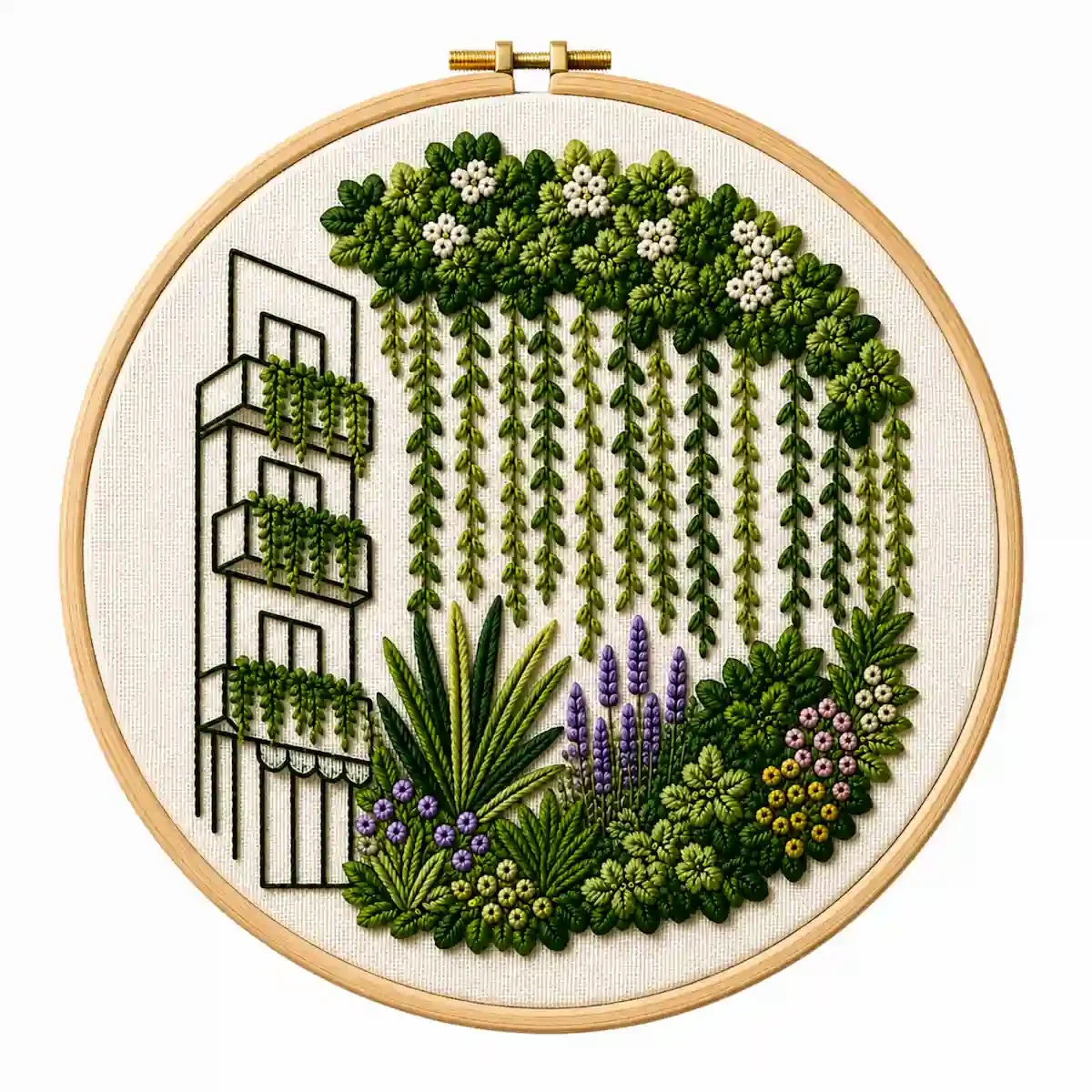
Copyright Knot Waste: Finished Embroidery Example for Bilbao’s Urban Green Wall
The Bilbao Urban Green Wall Embroidery Pattern
If you'd like to practise the stitches taught in this blog post on a real project, why not give the Knot Waste Urban Green Wall a go. The Beginner friendly embroidery pattern comes with step by step instructions, as well as a more detailed Stitch and colour guide. The set includes Beginner, Intermediate, and Advanced patterns, for you to work your way through as your stitching skills progress. Find it on the Etsy KnotWasteShop.
Frequently Asked Questions
What Is The Easiest Embroidery Stitch?
The Running Stitch is widely considered the easiest embroidery stitch to learn because it simply involves passing the needle in and out of the fabric in evenly spaced stitches. Once you've mastered it, you'll have the confidence to move on to other beginner-friendly stitches like back stitch, stem stitch and long and short stitch.
How Many Stitches Do I Need to Learn?
You only need to learn a handful of stitches to create beautiful embroidery. In fact, many modern embroidery patterns (including nature-inspired designs) can be completed using just four or five versatile stitches, making embroidery an enjoyable hobby that's easy to learn without feeling overwhelming.
Can I Teach Myself Embroidery?
Yes! Embroidery is one of the easiest crafts to teach yourself. With a few basic stitches, simple tools and a beginner-friendly pattern, you can quickly build confidence and create beautiful projects while learning at your own pace.
What Fabric Is Best for Beginners?
For beginners, a medium-weight cotton fabric is one of the best choices because it's easy to handle, holds stitches well and provides a smooth surface for practising new techniques. If you're looking for a more sustainable option, reclaimed fabrics such as denim or cotton from old clothing can also work beautifully, adding character and helping to give textiles a second life.
Do Embroidery Patterns Include Instructions?
When sold separately, the Knot Waste embroidery patterns don’t come with instructions but you can find helpful tips for beginners in our blog posts like this one. For Knot Waste sets, they usually contain Beginner, Intermediate and Advanced patterns, with an Instruction Book, Stitch guide, and Colour Guide. Our patterns are instantly downloadable PDFs. Visit the Etsy KnotWasteShopfor more info, or if you’re still undecided, read our blog post Embroidery As Nature Connection. It features step by step stitch instructions and free embroidery pattern for you to download and try out.
So, what are you waiting for? Not every stitch needs to be perfect. Nature certainly isn't! Find yourself some fabric, pick up your needle and thread and try out some simple beginner embroidery stitches.